I was poking around the dev tools on a competitor’s landing page last Tuesday—don’t act like you don’t do it—and I realized something that made me feel old. I wasn’t looking at a mess of obfuscated class names or compiled hex codes anymore. I was looking at a perfectly structured database.
Right there in the :root, they had exposed everything. Not just colors. Typography scales, spacing multipliers, animation curves, even semantic intent like --surface-elevation-2. It was all there.
And it hit me: CSS Custom Properties aren’t just variables anymore. They are the runtime API for your frontend. But if you’re still treating them like SASS variables that just happen to live in the browser, you’re probably missing the point.
The Shift from Build-Time to Run-Time
Back in 2020, we obsessed over build-time optimization. We wanted everything compiled down to static values because “performance.” But by late 2025, the trade-off shifted. The browser engines—especially after the Chrome 140 update optimized custom property recalculations—got ridiculously efficient at handling dynamic values.
I used to define my theme in a JSON file, process it with Tailwind or Style Dictionary, and spit out static CSS. It worked. But it was dead. Once that CSS hit the browser, the logic was gone. You couldn’t ask the site, “What is your primary color?” You had to know.
But now? I write my logic in the CSS.
Consider this. Instead of hardcoding a shadow, I’m seeing teams define the components of the shadow as variables:
:root {
  --shadow-color: 220 3% 15%;
  --shadow-strength: 1%;
  --shadow-1: 0 1px 2px -1px hsl(var(--shadow-color) / calc(var(--shadow-strength) + 9%));
}
Why? Because when Dark Mode toggles, I don’t swap the shadow definition. I just change --shadow-strength to 5% and the browser recalculates the matrix. It’s cleaner. It’s reactive.
Structure is “Scrape-able”
Here’s a weird benefit I didn’t expect: introspection.
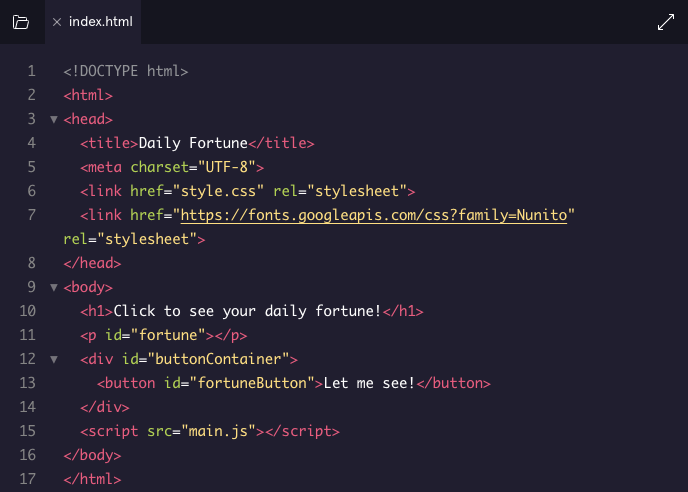
I built a small internal tool last month to audit our design system usage across three different Next.js apps (running React 19, obviously). And because we standardized our variable naming convention (--sys-color-role-prominence), I didn’t need to parse ASTs or dig through JavaScript config files.
I just fired up a headless browser, grabbed the computed styles of document.documentElement, and filtered by keys starting with --.
Boom. 800+ tokens extracted in 40 milliseconds.
This is why tools that “learn” design systems are popping up everywhere. If you structure your CSS variables correctly, your website documents itself. An AI agent—or just a new developer on your team—can look at the computed styles and understand the entire design language without reading a single line of documentation.
Typed Properties: The Safety Net We Needed
I resisted @property for a long time. Support was spotty, and it felt like verbose boilerplate. But now that we’re deep into 2026, baseline support is 100%. And if you aren’t using it for your core tokens, you’re probably asking for trouble.
Just last week, I spent three hours debugging a layout break. A junior dev had overwritten a spacing variable with "20" (string) instead of "20px". The layout collapsed silently because calc() operations just failed without error.
But if we had defined it properly, the browser would have ignored the invalid value:
@property --spacing-base {
  syntax: '';
  inherits: true;
  initial-value: 16px;
}
It’s verbose, yeah. But it enforces type safety at the browser engine level. Plus, it unlocks transitions on gradients, which is the kind of visual candy clients love.
The “Gotcha”: The Cascade is a Double-Edged Sword
And here is where I have to be the grumpy senior dev. Just because you can scope variables locally doesn’t mean you should go crazy with it.
I reviewed a PR recently where a developer was redefining --primary-color inside every single card component to handle “theming.”
Don’t do this.

When you redefine a variable locally, you break the global reference. If you have a global style that says “buttons inside cards should be transparent,” but the card has hijacked the variable the button relies on, you end up with specificity wars that are impossible to debug.
My rule of thumb?
1. Global tokens (--blue-500) never change.
2. Semantic tokens (--btn-bg) change based on theme context (light/dark).
3. Component tokens (--card-padding) are the only things you should touch locally.
Logic in the Browser
And the coolest thing happening right now is logic. We aren’t just storing values; we’re storing formulas.
I’m using this pattern on a current project to handle fluid typography without a single media query:
--fluid-bp: calc((100vw - 320px) / (1200 - 320));
--font-size: clamp(1rem, 1rem + 1vw, 1.5rem);
It’s responsive, it’s mathematical, and it runs on the compositor thread (mostly). No JavaScript resize listeners required.
A Note on Performance
But I did test this on a low-end Android device (simulating a Moto G Power) just to be sure. And heavy use of calc() inside variables that change frequently (like on scroll) will cause layout thrashing. I saw frame drops when animating a variable that 500+ nodes depended on.
So, keep your “hot” variables (the ones that change during interaction) isolated from your “cold” variables (the structural design system).
Final Thought
We used to treat CSS as a render target—something to be generated by “real” code. But that era is over. CSS variables have turned the stylesheet into a state management system for your UI’s appearance.
And if you’re building a design system in 2026 and you aren’t thinking about your variable namespace as a public API, you’re probably building technical debt. Structure them so they can be read, scraped, and understood. Your future self (and your AI tools) will thank you.